Wedding Videography Trends 2026: What Couples and Filmmakers Need to Know
Wedding videography continues to evolve as couples look for more personal, emotional, and shareable ways to remember their wedding day. In 2026, wedding films are moving beyond traditional coverage and heavily stylized montages. Couples increasingly want films that feel authentic, capture real personalities, and tell the story of their celebration.
At the same time, social media has changed how wedding content is created and consumed. A single wedding may now require a cinematic highlight film, documentary-style footage, vertical social media reels, teaser videos, ceremony edits, speech clips, and other short-form content.
For wedding videographers and filmmakers, this means adapting both production and post-production workflows. The best wedding films are no longer defined by camera movement and beautiful scenery alone. Storytelling, natural audio, authenticity, and the ability to deliver content in multiple formats are becoming increasingly important.
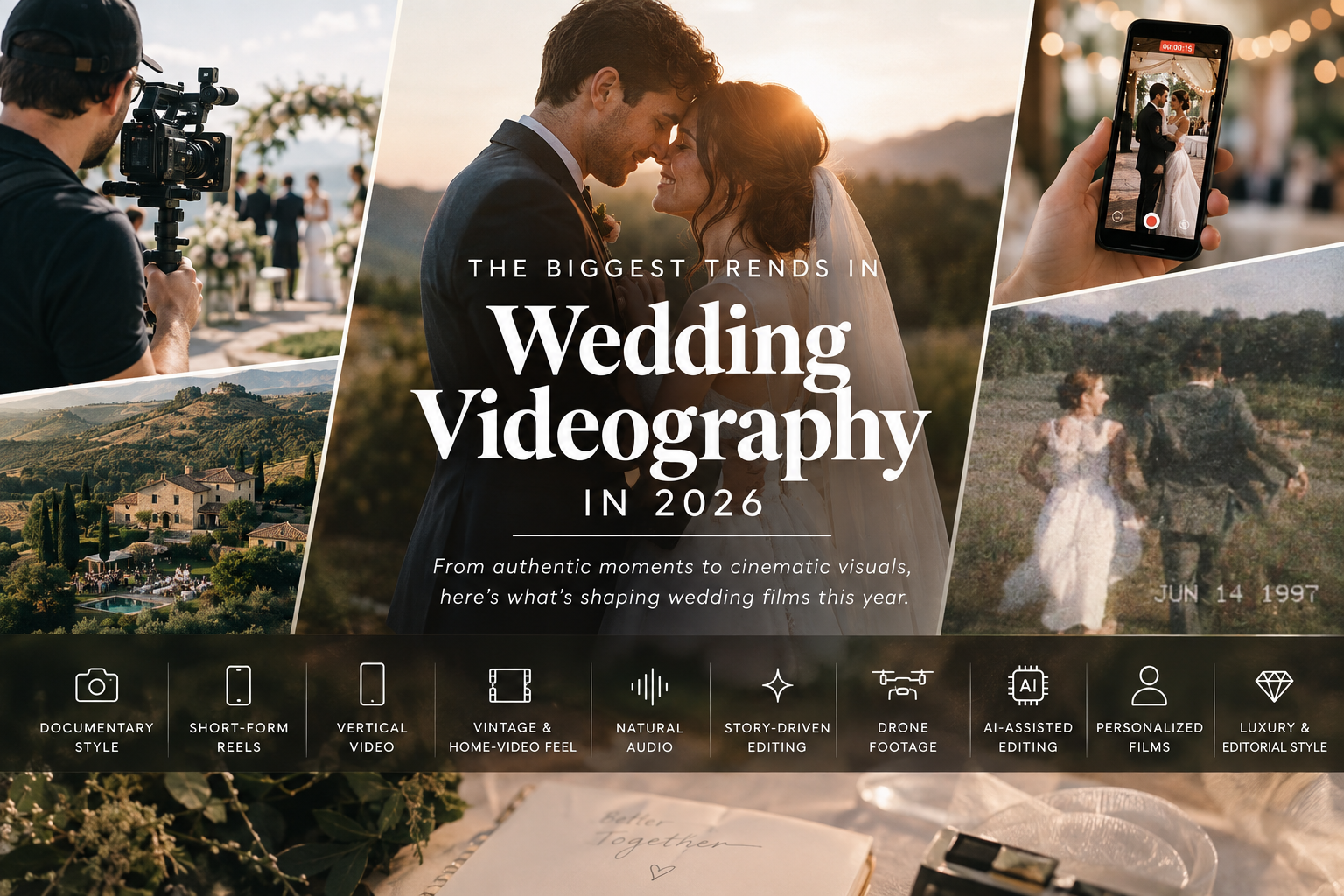
Quick takeaway: The biggest wedding videography trends in 2026 are centered around authenticity, storytelling, social-first content, natural audio, vintage and home-video aesthetics, personalized films, and efficient post-production.
- 1. Documentary-Style Wedding Films
- 2. Authentic and Unscripted Moments
- 3. Short-Form Wedding Reels
- 4. Vertical Wedding Videos for Social Media
- 5. Vintage and Home-Video Feel
- 6. Natural Audio Is Becoming More Important
- 7. Story-Driven Wedding Highlight Films
- 8. Multi-Camera Wedding Coverage
- 9. Drone and Aerial Wedding Footage
- 10. Faster Turnaround and Same-Day Wedding Content
- 11. AI-Assisted Wedding Video Editing
- 12. Personalized Wedding Films
- 13. Editorial and Luxury Wedding Films
- 14. Longer Documentary Wedding Films
- 15. Social-First Wedding Content
- What Wedding Videographers Should Prepare for in 2026
- How Professional Post-Production Supports Modern Wedding Videography
- The Future of Wedding Videography
- Frequently Asked Questions
- Conclusion
1. Documentary-Style Wedding Films
One of the biggest wedding videography trends in 2026 is the continued rise of documentary-style wedding filmmaking.
Rather than turning every wedding into a highly polished cinematic production, documentary wedding films focus on what actually happened. The nervous moments before the ceremony, a parent giving advice, friends laughing during cocktail hour, a spontaneous conversation between the couple, and the sound of guests cheering during the reception can become more meaningful than perfectly composed shots.
Documentary-style wedding videography often uses longer takes, natural camera movement, real conversations, authentic reactions, and observational coverage. Instead of forcing moments for the camera, filmmakers capture events as they naturally happen.
This approach also changes the editing process. The story depends heavily on selecting meaningful moments from hours of footage rather than simply combining beautiful shots with music.
The result is a wedding film that feels like a genuine memory rather than a commercial production.
2. Authentic and Unscripted Moments
Couples are increasingly interested in wedding films that show their real personalities. Perfect poses and staged reactions still have their place, but modern wedding films are making more room for imperfect, spontaneous moments.
A groom laughing uncontrollably during the ceremony can be more memorable than a perfectly framed shot of the venue. A bride joking with her bridesmaids can reveal more personality than a slow-motion dress shot.
A parent's emotional speech can provide more storytelling value than dozens of decorative detail shots.
This is why authenticity has become such an important part of modern wedding videography. Videographers should look beyond traditional beautiful shots and actively listen for moments that reveal character, relationships, humor, and emotion.
The camera doesn't always need to make the moment look cinematic. Sometimes, the most cinematic thing you can do is simply let the moment happen.
3. Short-Form Wedding Reels
The traditional wedding highlight film is no longer the only video couples expect. Short-form content has become an important part of wedding videography, particularly for Instagram Reels, TikTok, YouTube Shorts, and other vertical platforms.
Instead of delivering only one five-minute highlight film, wedding filmmakers can offer several short videos built around individual moments. Dedicated wedding social media reels can give couples content that is specifically edited for social platforms.
- A 30-second ceremony teaser
- A romantic couple reel
- A funny reception moment
- A first-look video
- A wedding speech clip
- A dance-floor highlight
- A behind-the-scenes wedding reel
- A cinematic venue teaser
These shorter videos can be delivered quickly after the wedding and give couples content they can share while the excitement is still fresh.
For wedding videographers, this creates another opportunity to package video services around both long-form storytelling and short-form social content.
4. Vertical Wedding Videos for Social Media
Another major wedding video trend is the shift toward vertical video. Traditional wedding films are generally produced in a horizontal 16:9 format, while many social platforms are designed around vertical 9:16 content.
This means filmmakers need to consider vertical delivery during production rather than treating it as an afterthought.
Composition becomes particularly important. When shooting with vertical delivery in mind, subjects need enough space around them for cropping. Important action should remain inside the safe area, while close-up shots can become extremely valuable.
A wedding filmmaker can also capture dedicated vertical footage throughout the day. This allows the final social content to feel intentionally created rather than simply cropped from a horizontal wedding film.
A modern wedding package can therefore include both 16:9 wedding films and 9:16 social media content.
5. Vintage and Home-Video Feel
Not every wedding moment needs to look perfectly polished. One of the most interesting wedding videography trends is the return of a nostalgic, vintage, and home-video aesthetic.
Grain, handheld camera movement, imperfect framing, natural exposure, direct flash, slightly faded colors, consumer-camera characteristics, and spontaneous composition can make wedding footage feel personal and nostalgic.
The appeal comes from its imperfections. Instead of looking like a commercial production, the footage can feel like something the couple discovered years later in an old family video collection.
This style works particularly well for getting-ready moments, family interactions, reception dancing, childhood memories, late-night celebrations, and spontaneous moments between the couple and their guests.
Wedding filmmakers can also mix vintage or home-video material with professionally shot cinematic footage. The contrast between polished visuals and imperfect personal footage can make the final wedding film feel more intimate and emotionally layered.
The goal isn't simply to make modern footage look old. The goal is to recreate the feeling of watching a personal memory.
6. Natural Audio Is Becoming More Important
One of the most important developments in modern wedding filmmaking is the growing emphasis on natural audio.
Beautiful visuals can create atmosphere, but dialogue creates context. Vows, speeches, laughter, conversations, reactions, cheers, and ambient sound can transform a collection of footage into a story.
Instead of using music continuously from beginning to end, modern wedding films can strategically mix music with natural sound.
A highlight film might begin with the groom's voice from a letter or speech before transitioning into music. Later, audio from the ceremony can return. A parent's speech might continue underneath a montage of family footage.
These techniques create emotional continuity.
For editors, this means audio organization should be treated as a core storytelling task rather than simply a technical cleanup stage.
Good wedding editing isn't only about finding the best-looking shots. It's about finding the words and sounds that make those shots meaningful.
7. Story-Driven Wedding Highlight Films
Another major wedding video trend in 2026 is the move toward stronger storytelling.
A wedding highlight video doesn't necessarily need to follow the exact chronological order of the day. Instead, editors can construct a narrative around emotional progression.
A film might begin with anticipation, move into the ceremony and emotional peak, and finish with celebration. This creates a clear beginning, middle, and end.
Beginning
Anticipation, preparation, introductions, letters, voiceovers, and establishing moments can establish the emotional world of the wedding.
Middle
The ceremony, vows, emotional reactions, speeches, and family moments can form the emotional center of the film.
Ending
Dancing, laughter, celebration, and energetic reception footage can create a satisfying and uplifting conclusion.
Music can support this progression, but dialogue and natural sound can provide the emotional foundation.
The result is a wedding film that feels less like a collection of highlights and more like a short documentary about the couple.
8. Multi-Camera Wedding Coverage
As couples expect more comprehensive wedding films, multi-camera production continues to be important.
Multiple cameras allow filmmakers to capture ceremonies and speeches from several perspectives. One camera might focus on the bride while another captures the groom's reaction. A third camera can provide a wide shot of the ceremony.
This creates much greater flexibility during editing.
Multi-camera coverage is particularly valuable for:
- Wedding ceremonies
- Vows
- Speeches
- First dances
- Parent dances
- Performances
- Cultural ceremonies
However, multiple cameras also create significantly more post-production work. Editors need to synchronize footage, organize camera angles, match color, clean audio, and select the strongest perspectives.
A well-organized post-production workflow becomes essential as wedding filmmakers take on more complex productions.
9. Drone and Aerial Wedding Footage
Drone footage remains a popular way to establish scale and location. Aerial footage can be particularly effective for destination weddings, outdoor ceremonies, estates, resorts, beaches, vineyards, and large venues.
However, drone footage works best when it contributes to the story. Aerial shots shouldn't simply be inserted because they look impressive.
A short establishing shot can introduce the venue. A drone shot can reveal the scale of a destination. An aerial transition can move the story from one location to another.
Used strategically, aerial footage provides context and visual variety without distracting from the people at the center of the story.
10. Faster Turnaround and Same-Day Wedding Content
Speed is becoming increasingly valuable in the wedding industry. Couples may want to see highlights during the reception, the following morning, or within a few days of their wedding.
Same-day edits are one example of this demand. A filmmaker may capture footage during the day, send selected clips through a rapid editing workflow, and present a short film during the reception.
Even when a true same-day edit isn't practical, faster teaser delivery can create a similar experience.
- Wedding day coverage
- 24–48 hour teaser
- Short-form social reels
- Full highlight film
- Long-form documentary edit
This creates multiple touchpoints with the couple instead of making them wait weeks or months for their final film.
Fast delivery does require efficient organization, editing systems, templates, and reliable post-production support.
11. AI-Assisted Wedding Video Editing
Artificial intelligence is becoming increasingly useful in video post-production.
AI tools can assist with tasks such as transcription, speech-to-text, searching footage, noise reduction, audio cleanup, caption creation, and other repetitive processes.
For wedding filmmakers, one particularly valuable application is finding dialogue within large amounts of footage.
Imagine having several hours of ceremony and reception footage. Instead of manually scrubbing through every clip to find a particular speech or phrase, transcription and search tools can help editors locate important moments faster.
However, AI should be viewed as an assistant rather than a replacement for creative editing.
AI can help organize footage, but it cannot automatically understand why a particular glance between two people matters emotionally.
Storytelling still requires human judgment. The strongest workflows combine technology with creative decision-making.
12. Personalized Wedding Films
Wedding films are becoming increasingly personalized.
Couples don't necessarily want a generic wedding video template. They want something that reflects their relationship.
That could mean incorporating personal letters, favorite songs, inside jokes, family stories, voice messages, childhood footage, or meaningful locations.
A wedding film can become a portrait of the couple rather than simply documentation of the wedding day.
Editors can ask one important question:
What makes this couple different from every other couple?
The answer should influence the structure, music, pacing, sound design, shot selection, and overall tone of the film.
Personalization is especially powerful because it makes the final video feel impossible to replicate.
13. Editorial and Luxury Wedding Films
Luxury weddings continue to influence wedding filmmaking aesthetics. Editorial wedding films often emphasize sophisticated composition, controlled camera movement, elegant pacing, architectural details, fashion-inspired imagery, and polished color grading.
Luxury doesn't necessarily mean adding more effects. In many cases, it means restraint.
Clean compositions, intentional movement, carefully selected music, refined sound design, and consistent color can create a premium feeling.
For filmmakers working with luxury clients, consistency is particularly important. Every shot should feel like it belongs to the same visual world.
14. Longer Documentary Wedding Films
While short-form content is growing rapidly, long-form wedding documentaries are also becoming more valuable.
A three-minute highlight cannot include every important conversation, speech, reaction, and moment from a wedding day.
Some couples therefore want a longer documentary film that preserves more of the actual experience.
These films might include:
- Full ceremony
- Complete speeches
- Extended vows
- Family interviews
- Reception moments
- Preparations
- Couple interactions
- Important cultural traditions
For filmmakers offering comprehensive coverage, a full wedding film can preserve the parts of the wedding that may not fit into a short highlight.
The combination of a short cinematic highlight and a longer documentary film gives couples both emotional storytelling and comprehensive preservation.
15. Social-First Wedding Content
Wedding videography is increasingly becoming a content ecosystem rather than a single finished video.
A single wedding can generate dozens of pieces of content.
One wedding → Full documentary → Highlight film → Teaser → Instagram Reels → TikTok clips → Ceremony clips → Speech clips → Vertical couple video
This creates opportunities for wedding videographers to increase the value of their packages without necessarily increasing shooting time dramatically.
It also means editors need to understand platform-specific storytelling. A five-minute wedding film and a 20-second Instagram Reel require completely different pacing.
The footage may be the same, but the storytelling strategy is different.
What Wedding Videographers Should Prepare for in 2026
The biggest lesson from these wedding videography trends is that couples are looking for more than beautiful footage.
They want memories. They want personality. They want emotion. And increasingly, they want those memories delivered in multiple formats.
For wedding filmmakers, that means developing skills beyond camera operation.
You need to understand storytelling, audio, editing, color, social media, file organization, delivery, and client experience.
A modern wedding videography package might include:
- Full wedding documentary
- 3–5 minute highlight film
- 5–10 minute extended film
- 15–60 second teaser
- Vertical Instagram Reels
- Ceremony edit
- Speech edits
- Social media clips
- Drone footage
- Vintage or home-video style footage
How Professional Post-Production Supports Modern Wedding Videography
As wedding video production becomes more complex, post-production can become one of the biggest challenges for filmmakers.
A single wedding may involve multiple cameras, dozens of memory cards, hours of footage, separate audio recordings, drone files, speeches, ceremony recordings, and social-media deliverables.
Editing all of this takes time.
For busy wedding videographers, outsourcing some or all of the post-production can provide additional capacity without requiring them to hire a full-time in-house editor.
If you're looking for a structured wedding video editing service for your post-production workflow, the right editing partner can help transform large amounts of raw footage into finished wedding films while maintaining your creative direction.
Professional wedding post-production can include:
- Footage organization
- Multi-camera synchronization
- Story selection
- Wedding highlight editing
- Audio cleanup
- Dialogue editing
- Color correction
- Color grading
- Music synchronization
- Sound design
- Social media reels
- Vertical video versions
- Revision management
- Final delivery
The most important consideration is style matching.
Every wedding filmmaker has a different visual language. Some prefer cinematic films. Others prefer documentary storytelling. Some prioritize emotional speeches and natural sound, while others prefer energetic, music-driven edits.
A professional post-production workflow should adapt to the filmmaker's established style rather than forcing every wedding into the same editing template.
You can also explore the complete wedding video editing process to understand how organized post-production can fit into a professional wedding filmmaking workflow.
The Future of Wedding Videography
Wedding videography is moving toward a more flexible combination of documentary storytelling, cinematic visuals, social media content, and personalized experiences.
The most successful wedding films won't necessarily be the ones with the most effects or the most expensive cameras.
They will be the films that make viewers feel something.
Technology will continue to improve production and editing workflows. AI will make certain repetitive tasks faster. Social platforms will continue to influence delivery formats. Cameras will become more capable.
But the fundamental purpose of wedding filmmaking will remain the same:
Tell the story of two people and preserve the moments they never want to forget.
For wedding videographers, the opportunity is to embrace new technology without losing sight of authentic storytelling.
Capture the real moments. Record meaningful audio. Build stronger stories. Create content for multiple platforms. And use post-production strategically to turn hours of footage into films that couples will continue watching for years.
Looking for practical resources for your next wedding production? Explore our wedding filmmaker tools to help plan and manage your wedding video workflow.
Need Help With Wedding Video Post-Production?
Focus on filming and growing your wedding business while an experienced editing team handles your wedding films, highlights, social reels, audio, color, and post-production workflow.
Start a ProjectFrequently Asked Questions About Wedding Videography Trends
Some of the biggest wedding videography trends in 2026 include documentary-style filmmaking, authentic and unscripted moments, short-form wedding reels, vertical video, vintage and home-video aesthetics, natural audio, story-driven editing, drone footage, AI-assisted post-production, personalized wedding films, and social-first content.
Yes. Cinematic wedding films remain popular, but the definition of cinematic wedding videography is evolving. Many couples now prefer cinematic visuals combined with authentic dialogue, natural reactions, real audio, and documentary-style storytelling.
Yes. Vertical video is increasingly important for social platforms such as Instagram Reels, TikTok, and YouTube Shorts. Wedding videographers can benefit from capturing footage and framing compositions with vertical delivery in mind.
Vintage and home-video wedding footage uses nostalgic characteristics such as handheld movement, imperfect framing, natural exposure, grain, direct flash, softer colors, and spontaneous moments. The goal is to create the feeling of watching a personal family memory rather than a highly polished commercial production.
There is no single ideal length. Many wedding filmmakers offer highlights between approximately three and ten minutes, depending on their storytelling style, footage, and the client's preferences. Shorter versions can also be created specifically for social media.
AI can automate and accelerate certain editing tasks, including transcription, footage searching, audio cleanup, and caption generation. However, creative wedding editing still requires human judgment for story structure, emotional pacing, shot selection, music decisions, and understanding the couple's personality.
Outsourcing can be useful for filmmakers who have more projects than they can comfortably edit themselves. A reliable post-production partner can help increase editing capacity while allowing the filmmaker to focus on shooting, client relationships, marketing, sales, and business development.
Natural audio provides context and emotion that music alone cannot create. Vows, speeches, laughter, conversations, cheers, and ambient sounds help transform wedding footage into a personal story and can make the final film feel more authentic.
Authentic wedding videos usually focus on real interactions, unscripted reactions, natural audio, meaningful dialogue, genuine emotion, and moments that reflect the couple's personality instead of relying entirely on staged shots or heavy visual effects.
Conclusion
The wedding videography trends of 2026 point toward a more authentic, flexible, and story-driven future.
Couples want films that feel real. They want emotional moments, natural conversations, beautiful visuals, and content they can share immediately with friends and family.
At the same time, wedding filmmakers are producing more content than ever before.
The future belongs to videographers who can combine strong production with efficient post-production.
Whether you're filming an intimate backyard wedding, a luxury celebration, or a destination wedding, the goal remains simple:
Create a film that doesn't just show what happened—it makes people feel what it was like to be there.
If you are a wedding filmmaker looking to improve your production and editing workflow, you can also explore our wedding video editing portfolio to see examples of professional wedding post-production.